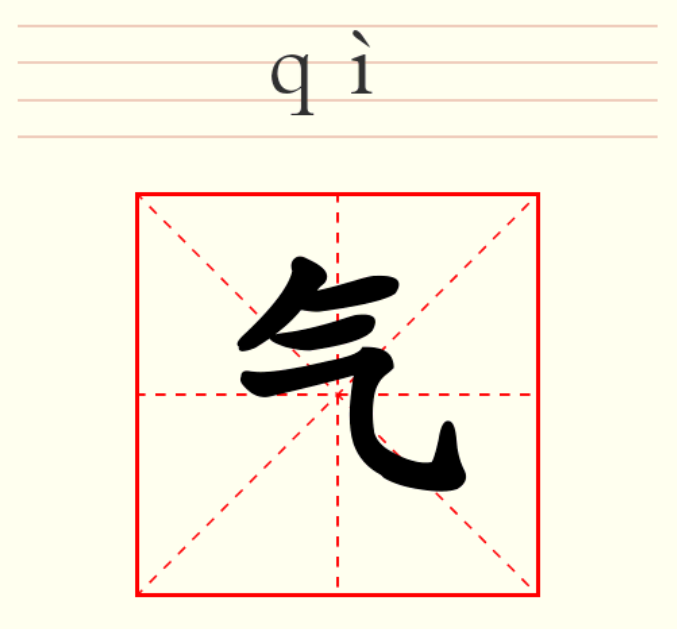
气 Qi
In Traditional Chinese Medicine (TCM), Qi (pronounced “chee”) is understood as the vital life force that flows through all living things. The literal meaning of “Qi” is breath — the very act of breathing that keeps us alive moment by moment. But in a deeper sense, Qi is the intelligent energy that initiates and accompanies all bodily movement, warms the body, protects against illness, and ensures physical stability. Think of Qi as the body‘s innate intelligence — the intangible yet essential force that regulates internal harmony and sustains health. In Chinese philosophy, Qi is present everywhere: in mountains and plants, in food and air, and within every organ and cell of the human body. It is both the fuel and the driver of life itself.
In TCM, health is not merely the absence of disease — it is the state in which Qi flows smoothly, abundantly, and in the right direction through the body‘s energy pathways, known as meridians. When Qi flows freely, the body is energised, the mind is clear, digestion functions properly, and immunity is strong. When Qi is blocked, weakened, or stagnant, however, imbalances arise — fatigue, poor digestion, irritability, poor sleep, and frequent illness are common signs. This is why TCM practices such as acupuncture, qigong, herbal remedies, and mindful eating all share a common goal: to restore the proper flow of Qi and bring the body back into harmony. Just as a river needs a clear channel to run freely, the body needs unobstructed Qi to thrive.
What we eat has a direct and profound impact on the quality of our Qi. In TCM, food is not measured merely in calories, but in its energetic properties — whether it warms or cools the body, whether it builds or disperses energy. A balanced diet of whole, nourishing foods — particularly those rich in natural sweetness, warming spices, and deep-coloured botanicals — helps to generate what is known as Ying Qi, the energy derived from nutrition that fuels the immune system and supports overall vitality. This is where nature‘s most potent ingredients come into play. Certain foods and herbs have long been prized in TCM for their ability to tonify Qi: to replenish, strengthen, and support the body’s fundamental energy reserves.
At the heart of many TCM Qi‑building traditions are some of the most valued natural ingredients from the East: ginseng, goji berries, ginger, and other adaptogenic botanicals. Ginseng is renowned for its ability to replenish Original Qi (Yuan Qi), helping the body combat fatigue, adapt to stress, and restore stamina. Goji berries — naturally sweet and rich in antioxidants — nourish the blood and support healthy Qi flow, offering a gentle yet sustained source of energy when eaten daily. Warming spices like ginger and cinnamon further help to circulate Qi and dispel cold from the body. These simple, everyday ingredients form the foundation of what might be called a Qi Ritual: small, intentional acts of nourishment that, over time, build a reservoir of vitality. Whether it‘s a handful of goji berries in the morning, a cup of ginger tea in the afternoon, or a slow‑simmered ginseng infusion in the evening, each ritual brings the body closer to balance — and closer to the profound wisdom of Qi.